Showing posts with label Communion. Show all posts

Monday, March 2, 2015

You Are What You Eat


We’ve all heard the phrase “You are what you eat.” The foods we take into our bodies determine our health, our energy levels, and even our moods. Many diseases are directly related to diet, and we can prevent, control, or cure them through careful eating habits. In her novel Like Water for Chocolate, author Laura Esquivel explores the idea that our emotions can permeate the food we prepare, altering the experience of the people who consume it.

Jesus once told his disciples, who were asking if he was hungry: “I have food to eat that you do not know about” (John 4:32). In their stubbornly literal manner, they assumed he was talking about physical food and wondered who brought it, so he further explained: “My food is to do the will of him who sent me and to complete his work” (v 34).What a radical idea: that we can be nourished by giving, and not just by receiving.

Mission trips can be hard work. We may think of missionaries as people who travel and convert “pagans” on someone else’s dime, but modern missions tend to focus on service. From digging wells to repairing homes to facing down sex traffickers, today’s missionaries spread the Good News by showing how it’s transformed their hearts. Almost to a person, they will tell us the hard, sometimes brutal, work fills them with purpose and leaves them rejuvenated.
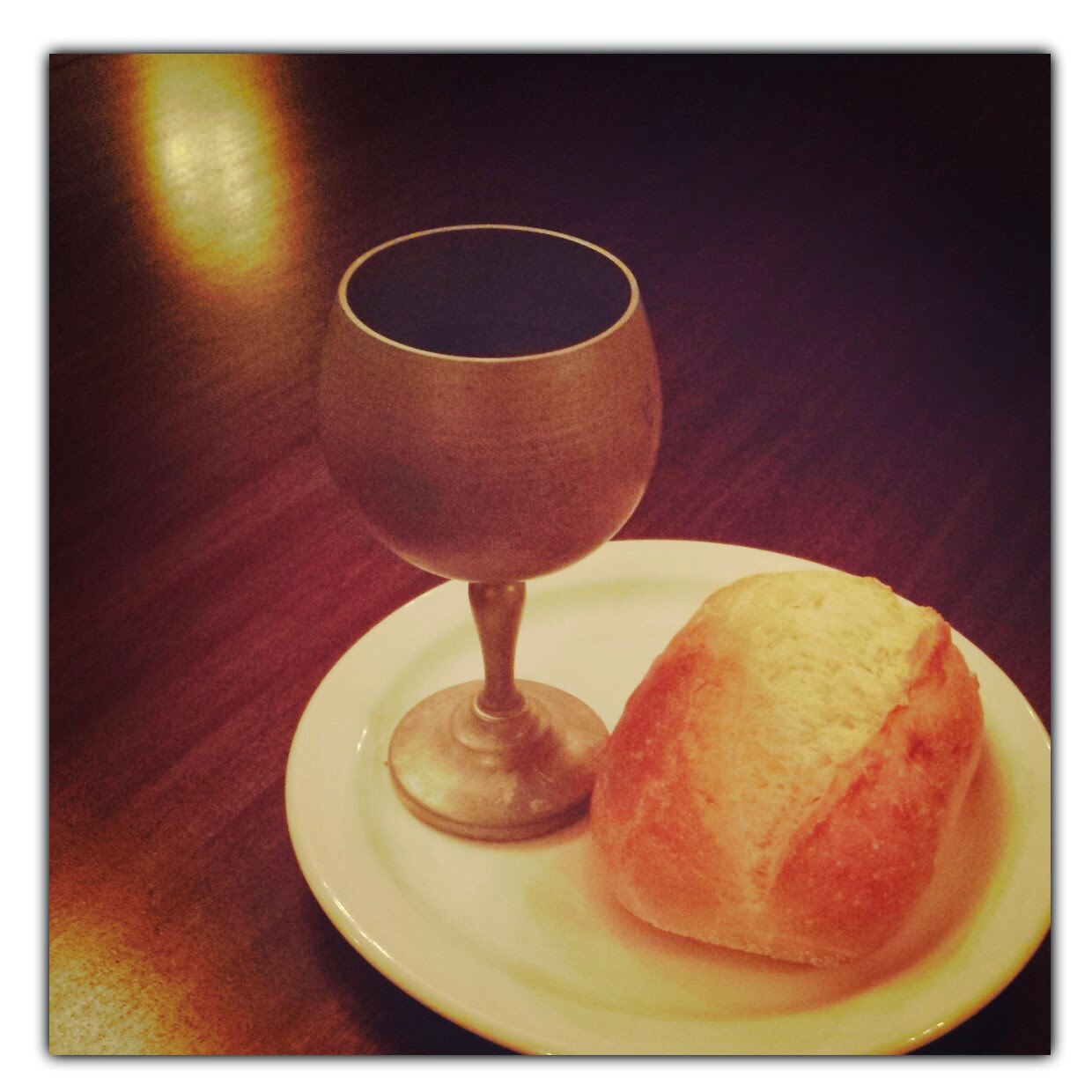
Doing God’s work feeds us. It strengthens and refreshes our spirits. Maybe we start doing it because we think it’s what’s required of us, but if we surrender to the joy that can be found in service, we will find our spiritual hunger is satisfied not by the result or the gratitude (which may not always be present), but by the act of service itself.


As Christians we gather around the communion table, which represents God’s ultimate work in the world through the person of Jesus Christ. How fitting we commemorate him in a meal that is both physical and spiritual. When we share the bread and cup, we remember blessings are multiplied when we use them to serve others.


Evening readings: Psalms 121; 6

Thursday, October 10, 2013

The Communion Equation

Today's readings: Psalms 89:1-18, 147:1-11; 2 Kings 22:14-23:3; 1 Corinthians 11:23-34; Matthew 9:9-17

The Lord’s Supper – communion – is the oldest of Christian traditions. It is breathtaking in its meaning and simplicity. Every time we partake of the bread and cup, we remember the meaning of Christ’s sacrifice for us, and strengthen the bonds of our faith community. It unites us not only with those at our particular table sharing our particular cup, but with Christians across time and distance.

Did you know the potluck is an equally longstanding tradition? When the early Christians of Corinth gathered for communion, they first shared an Agape Meal (or Love Feast). Everyone brought food to share and they ate in common. After a time, the original intent of the meal was diminished: some who contributed more food felt they should
have a larger portion; some began to get drunk; some were almost as hungry when they left as when they arrived. Divisions and resentments became part of the meal and – worse yet – these attitudes were carried to the communion table. The meal no longer strengthened bonds, but division. Have we seen this happen?

Disagreement is inevitable. An uncharitable attitude is not. At Christ’s table all are equal. Christ himself ate with tax collectors, sinners and all manner of “outcasts” from his community (Matt 9:10-13). When we gather as Christians, we should share our gifts freely and equally. Bringing more food (or money, or time, or a particular talent, or…) to the table does not entitle us to a larger share or more influence. Having less to bring does not mean we go away less satisfied or unheard. Giving and receiving are two sides of the same equation, and we can find ourselves on either side at any time. In this holy algebra, Christ is the sign of equality who unites and balances us.

Evening readings: Psalms 1, 33

Friday, December 14, 2012

Sometimes it's better to receive...

Today's readings: Psalms 102, 148; Isaiah 7:10-25; 2 Thessalonians 2:13-3:5; Luke 22:14-30

How do you feel about being loved? The answer may depend on the kind of love we are talking about. Romantic love? Most of us are happy to receive it. Love in the form of mercy? We are often surprised by it, but almost always welcome it. How about love in the form of charity? Ah! That's a tougher one. As Christians, we are usually happy to dispense it, but many (most?) of us are far less comfortable on the receiving end. But wait ... if we believe receiving charity somehow diminishes us, what does that say about our true feelings about others who accept it? Are we thinking of them as equals? How we receive tells us about the underpinnings of our giving.

Before Jesus broke bread and poured wine at the Last Supper, he stripped to the waist and washed the feet of everyone present. Later he told them "the greatest among you must become like the youngest, and the leader like one who serves" (Luke 22:26). This passage is usually used to teach the importance of being servants, but it contains another, often overlooked lesson: we must be willing to be served. How does this idea sit with us -- particularly us capitalist, by-our-own-bootstraps, modern Americans? Not very well, that's how. We are immersed in a secular culture based on a merit mentality with an implicit asumption the virtuous are rewarded and the lazy and other "sinners" are not. We have to be deliberate about disentangling ourselves from this notion, or we can't truly be givers in a Christian sense; nor can we get past the insecurity (masquerading as pride) which prevents us from receiving with a glad heart.

The requirements we have chosen to place on all the communion tables that are heirs to that Last Supper say more about the people making the rules than the people they exclude. The necessary flip side of believing some are not welcome at the table is the idea that the rest have somehow earned an invitation. Christ's gifts to us can never be earned but are given freely. Until we believe it is acceptable - necessary - for us to receive love from God or people without earning it, we can't truly believe it for others. Let's receive joyfully!

Evening readings: Psalms 130, 16